How to Make a Video Ad That Actually Sells: Lessons From Hundreds of Campaigns
Every brand wants "a video that goes viral." What brands actually need is a video that sells, and those are two different projects. After producing and running hundreds of video ads, we can tell you the uncomfortable truth: most video ads are decided in the first two seconds, and most budgets are spent on everything except those two seconds.
Here's what we've learned about making videos that move product, not just views.
The Hook Is the Whole Game
On any feed, your ad gets a two-second audition. The viewer's thumb is already moving; your opening either interrupts that motion or it doesn't. Nothing that happens at second 15 matters if second one loses.
What earns those seconds? Motion, faces, tension, and specificity. Start mid-action, not with a logo. Open with the most surprising frame you have, not the establishing shot. Ask the question your customer is already asking. Show the end result first, the transformation, the finished dish, the before/after, then explain how.
A rule we enforce in our own edits: if you can cut the first three seconds and the ad still makes sense, cut them. Whatever survives that test is your real opening.
Structure: Say One Thing
Weak ads try to say everything, quality, price, heritage, variety, service, and land nothing. Strong ads make one promise, prove it fast, and tell the viewer exactly what to do next.
The structure that keeps working: hook (0–2s), the promise made visually (2–8s), quick proof: a demo, a reaction, a number, a review (8–20s), then a clear call to action with urgency or an offer. Under thirty seconds for cold audiences. If you have more to say, that's not one longer ad; it's a second ad.
Sound Design Is Half the Emotion, But Design for Silence
Music choice changes how the same footage feels: premium, fun, urgent, warm. Take it seriously, and mind the licensing: a takedown mid-campaign is a self-inflicted wound.
At the same time, a large share of viewers watch with sound off. Your ad must work silent: captions on every spoken word, text overlays for key points, and a story readable from images alone. The best ads are built silent-first, then elevated by sound for those who have it on.
What Production Quality Do You Actually Need?
Here's a nuance that saves clients real money: match the production level to the platform and the job.
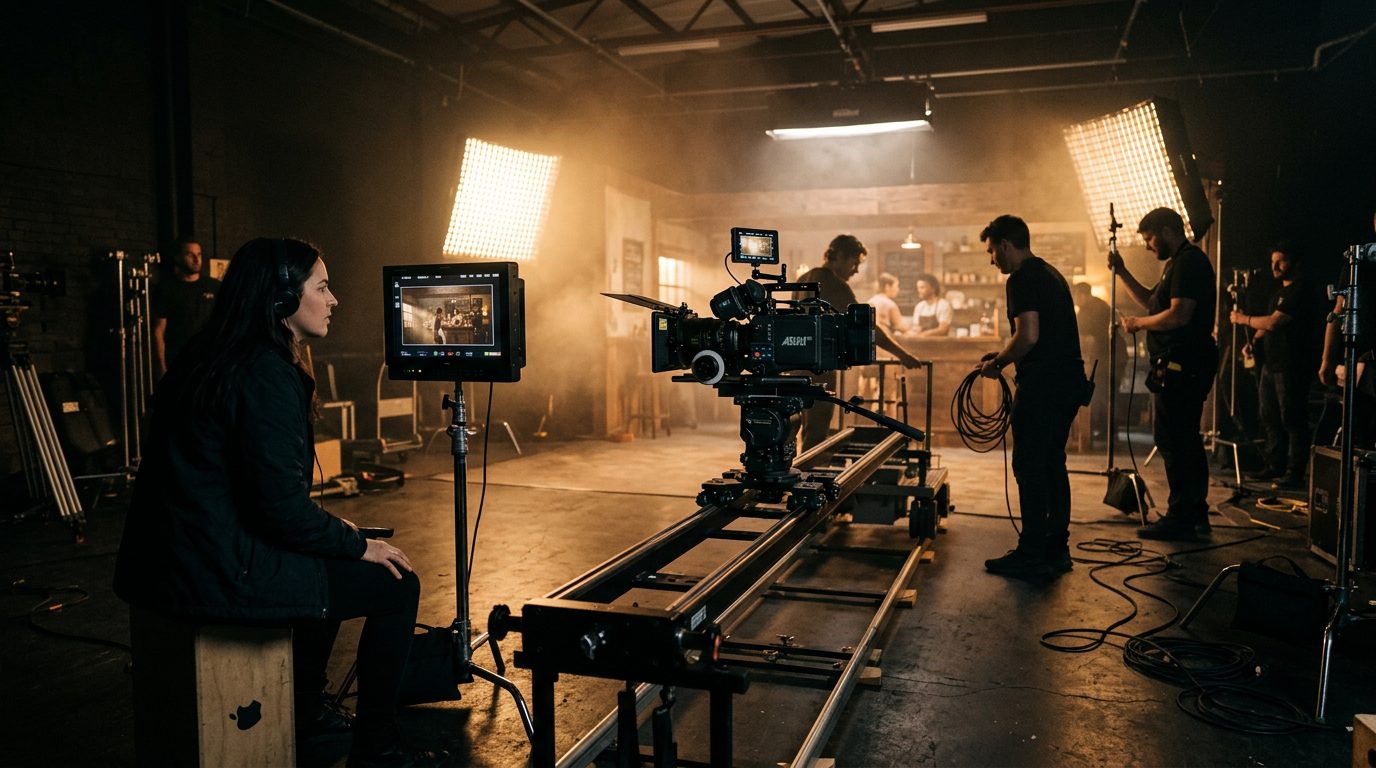
Big brand films need cinema: lighting, art direction, color grading. That level signals scale and builds the brand for years. But daily performance ads often win by looking native: phone-shot, fast-cut, real people, real locations. On TikTok especially, polish can actively hurt: the audience smells "advertisement" and skips.
The mature setup is a pyramid: one hero production per season that defines the brand, supported by a steady stream of fast, native, tested content. The expensive mistake is producing one beautiful film and expecting it to carry the whole year alone.
Make Variations or Waste the Shoot
The single highest-leverage habit in video advertising: never produce one version. From one shooting day you should walk away with different hooks, different lengths (6s, 15s, 30s), vertical and square crops, and versions leading with different benefits.
Why? Because nobody, not us, not you, not the algorithm whisperers, reliably predicts the winner. You test five openings, the data crowns one, and you put your budget behind it. Brands that test variations systematically outperform brands that bet everything on one cut. It isn't close.
The Metric That Tells You the Truth
Views are vanity. Watch three numbers instead: hook rate (are people staying past 3 seconds?), completion or hold rate (is the middle holding them?), and, the only one that pays rent, cost per result. A "boring" ad with a great cost per sale beats a beautiful ad with applause and no orders. Every time.
From Idea to Running Ad
This whole pipeline, concept, script, shoot, edit, variations, testing, scaling, is what our production and performance teams do together under one roof, which means the people filming your ad know exactly what the ad manager needs it to do. That connection is where results come from.
Got a product that deserves a better ad? Talk to Blue Agency: bring us the product, we'll bring the two seconds that sell it.